Azelaic Acid 20% w/w Serum
A focused serum for oily-looking, congestion-prone skin with niacinamide in the formula.

By Skin Type
Oily skin, without the stripped-skin spiral.
Shine by lunch, congestion by the weekend, and a routine that somehow makes everything feel busier. This is the calmer way to support oily skin.
The oily skin routine
A compact edit for oily skin: niacinamide-rich support, peptide backup, and lightweight hydration that does not feel like a heavy layer.
A focused serum for oily-looking, congestion-prone skin with niacinamide in the formula.

Peptide support for skin that looks stressed after breakouts or too many routine changes.

Lightweight hydration support so oily skin does not have to choose between fresh and comfortable.
Built for shiny-skin routines
3 steps
A compact routine before the full product edit
0 strip
Built around balance, not harsh over-cleansing
AM/PM
Easy enough to repeat when skin feels shiny
Browse the full edit
Use the core routine first, then browse lightweight serums, body care, and extras when you know what your skin actually likes.

Type: Serums

Type: Serums

Type: LED Light Therapy

Type: Moisturisers


Type: Serums

Type: Cleansers

Type: Serums

Type: Bundles + Kits

Type: Face Masks
Oily skin guide
Here is the full guide: what oily skin usually means, how to build the routine, which ingredients make sense, and how to avoid turning shine control into skin chaos.
Start here
Oily skin usually means the skin produces enough surface oil that shine shows up quickly through the day. For some people it is a T-zone thing. For others, it is the whole face. It can come with makeup sliding, pores looking more obvious, or congestion that seems to build as soon as the routine gets too rich.
The catch is that oily skin is not automatically strong skin. It can still feel tight after cleansing. It can still react to too many actives. It can still get dehydrated if the routine is all control and no comfort. That is why a good oily skin routine should feel lightweight, not aggressive.
What is happening
When every product is mattifying, exfoliating, or drying, the routine can leave skin feeling tight. Tight skin is not the same as balanced skin.
When the routine gets too rich, oily skin can feel coated. Lightweight humectants usually make more sense than heavy layers early in the routine.
Routine logic
Start with the product jobs, not the product count. Oily skin usually does better when each step has a clear reason to exist. A cleanser should clean without leaving the skin feeling squeaky. A serum should support the look of shine, congestion, tone, or recovery. A hydration step should feel light enough that you are not tempted to skip it.
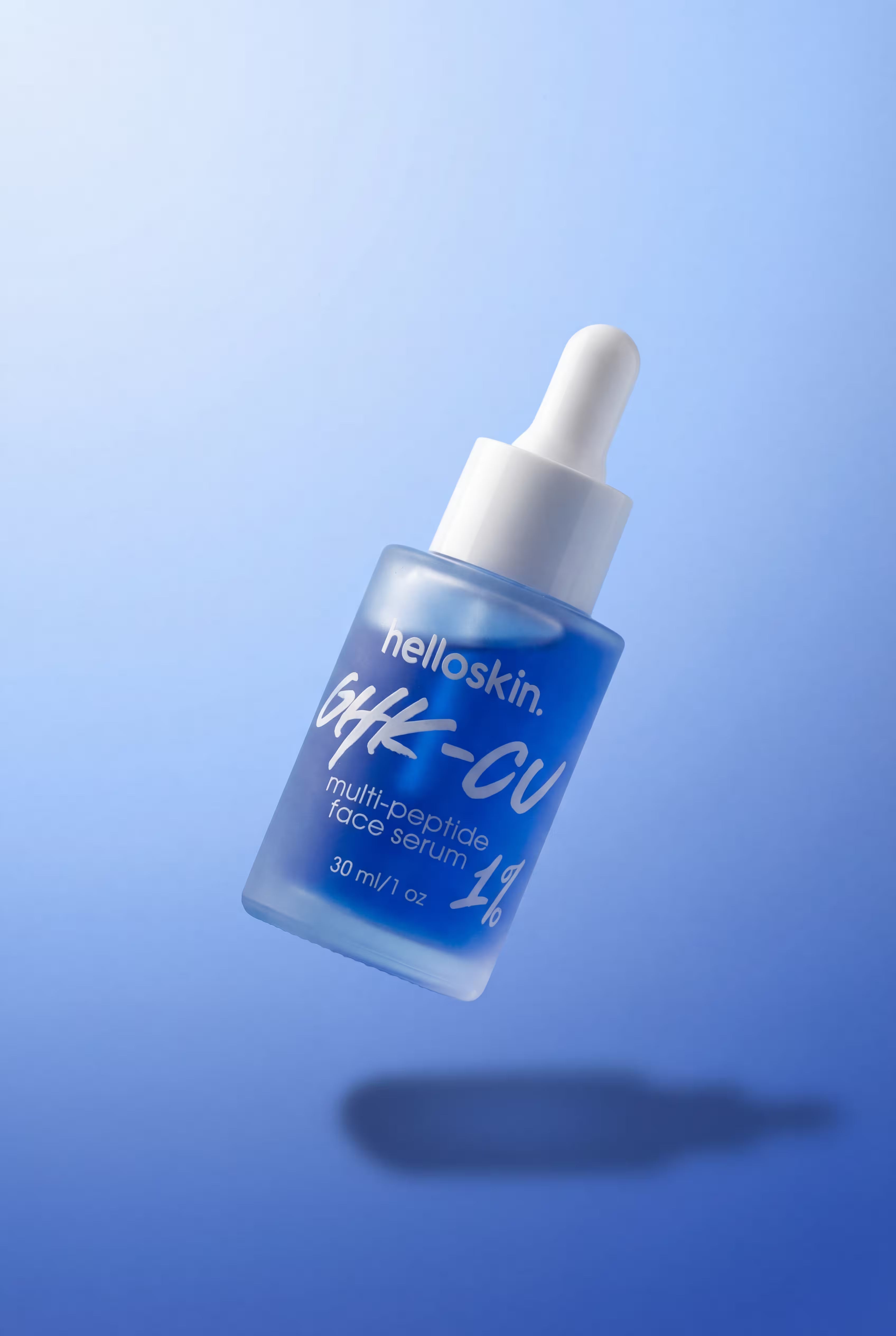
For Helloskin, the oily skin routine starts with Azelaic Acid 20% w/w Serum because it includes niacinamide and fits the oil/congestion support lane. GHK-Cu Serum gives the routine peptide support when skin looks stressed after breakouts. Hyaluronic Acid Serum adds lightweight hydration without turning the whole routine into a heavy cream sandwich.
Ingredient logic
Niacinamide is one of the easiest ingredients to understand for oily skin because it fits several common shopper concerns at once: visible shine, uneven-looking tone, and skin that feels a bit too busy. Copper Tripeptide-1 is not an oil-control ingredient, but it belongs in this routine because oily skin often overlaps with post-breakout recovery and stressed-looking texture.
Hydration still matters. Sodium Hyaluronate, Hydrolyzed Sodium Hyaluronate, and Glycerin explain why water-binding support can help a routine feel fresh without adding heaviness.
Expectations
Progress for oily skin is not always about becoming matte all day. A more realistic goal is skin that feels less chaotic: less tight after cleansing, less overloaded after serums, and easier to manage through the day. Some people notice the routine feels better first. The visible changes can take more consistency.
The classic oily-skin trap is stripping: harsh cleansers and too many actives, which can push skin to make even more oil to compensate. A lighter hand usually wins – balanced cleansing, one or two actives that earn their place and a light moisturiser you don't skip.
Why this happens
Oily skin is often framed like the problem is simply too much product, too much shine, or not enough cleansing. The better read is usually more balanced. Oily skin can feel greasy on the surface and still feel tight, reactive, or dehydrated underneath.
That is where people accidentally make the routine worse. They cleanse harder, skip hydration, stack too many mattifying products, then wonder why the skin looks shiny again by lunch. The goal is not to make the skin feel stripped. The goal is to keep the routine lightweight, consistent, and supportive.
A strong oily skin routine focuses on three jobs: helping the skin look less shiny, keeping congestion-prone areas supported, and giving the skin enough hydration that the barrier does not feel overworked.
The best skincare routine for oily skin is usually a lightweight, barrier-aware routine that supports shine, congestion, and hydration without stripping the skin. Helloskin's oily skin edit pairs niacinamide-rich blemish support, GHK-Cu peptide support, and lightweight hydration so the routine feels clear instead of crowded.
Oily skin does not need punishment. It needs a routine that keeps shine, congestion, and hydration in the same conversation.
01
Use niacinamide-rich support to help oily-looking skin feel more controlled without chasing that squeaky-clean finish.
02
Add GHK-Cu peptide support when oily skin also deals with post-breakout unevenness or a stressed-looking finish.
03
Keep a lightweight water-binding layer in the routine so oily skin does not get tricked into feeling tight and overworked.
Why this stack
For skin that feels glossy fast but still needs hydration
Helps keep the routine focused when pores look busy
Supports skin that looks stressed after repeat breakouts
A less-is-more routine for skin that is tired of being overcorrected
Common questions
The best oily skin routine is usually lightweight, consistent, and barrier-aware. Start with gentle cleansing, one focused serum for shine or congestion support, and a lightweight hydration step.
No. Oily skin can still feel dehydrated. Lightweight humectants like hyaluronic acid and glycerin can support hydration without making the routine feel heavy.
Niacinamide is a useful ingredient for oily-looking skin because it fits routines focused on visible shine, uneven tone, and congestion-prone skin.
That tight feeling can happen when a routine is too stripping. Oily skin can produce surface oil and still feel uncomfortable when the barrier is overworked.
Your cart is currently empty.
Not sure where to start?
Try these collections: