Azelaic Acid 20% w/w Serum
Helps target the look of blemishes, congestion, and post-breakout unevenness.

By Skin Concern
Hormonal acne, treated topically.
Cycle flare-ups, stress breakouts, post-blemish marks. A focused peptide routine for skin that likes to keep receipts.
The hormonal acne routine
A tighter edit for skin that flares in patterns: oil and congestion support first, peptide repair second, LED backup third.
Helps target the look of blemishes, congestion, and post-breakout unevenness.

Peptide-led support for skin that looks stressed after repeat flare-ups.

Adds blue and red LED support when your breakout-prone skin needs consistency.
Loved by breakout-prone skin
★★★★★
Average rating across 240+ reviews
8-12wk
The consistency window customers can actually follow
3 steps
Curated products before the full collection edit
Browse the full edit
Browse body breakout care, bundles, and extra support after the core routine is clear.

Type: Serums

Type: Serums

Type: Bundles + Kits

Type: Serums


Type: Serums
Type: Tweens & Teens Skincare

Type: Serums
Type: Tweens & Teens Skincare

Type: Serums


Hormonal acne guide
Hormonal acne isn't a willpower problem or a sign you're bad at skincare. It's your hormones talking to your oil glands, usually along the jaw and chin. Here's what's actually happening under the skin, how to build a routine that works with your cycle instead of against it, and what week-to-week progress realistically looks like.
Start here
Hormonal acne often shows up in patterns. For some people it appears around the chin, jawline, or lower cheeks. For others, it arrives around a cycle change, after a stressful stretch, or when the skin feels oilier and more reactive than usual.
The frustrating part is that it can feel like the breakout starts before you have a chance to respond. That is why the routine matters. A good topical routine is not about throwing every active at your face. It is about supporting oil balance, calming the look of angry skin, and helping the skin recover after each flare-up.
What is happening
When oil feels heavier or pores look more congested, breakout-prone skin can need support that keeps the routine steady without stripping the barrier.
After the active breakout stage, the next concern is often uneven tone, visible marks, and skin that looks stressed from repeat flare-ups.
Routine logic
Start with the products that have a clear job. For breakout-prone skin, that usually means one step for congestion and oil support, one step for visible recovery, and one backup tool for consistency when the skin is doing the most.
Keep the routine boring enough that you can repeat it. The best protocol is the one you can actually follow for long enough to see how your skin responds. If you change five things at once, it becomes harder to know what helped, what irritated, and what was just your skin cycling through a flare.
Expectations
Progress is not always linear. Some weeks are about fewer new breakouts. Some are about calmer-looking skin. Some are about the marks after breakouts looking less intense over time.
That is why this page needs more than a product grid. The content should help customers understand what they are buying, how to use it, what to expect, and how to avoid turning a simple protocol into a complicated routine they abandon.
Why This Happens
Hormonal acne is linked to the way oil, congestion, visible redness, and recovery time can shift together. That is why it often feels different to a one-off blemish. It can appear in familiar zones, follow a rough pattern, and leave the skin looking uneven after the active breakout has settled.
Because the trigger is hormonal, skincare works on the outside, not the cause. That's not a downside – a focused, consistent routine is exactly what breakout-prone skin responds to best. The trap is doing too much: piling on strong actives usually irritates skin and makes things look worse.
A stronger topical routine focuses on three jobs: supporting the look of oil and congestion, calming the appearance of stressed skin, and helping the skin look more even after repeat flare-ups.
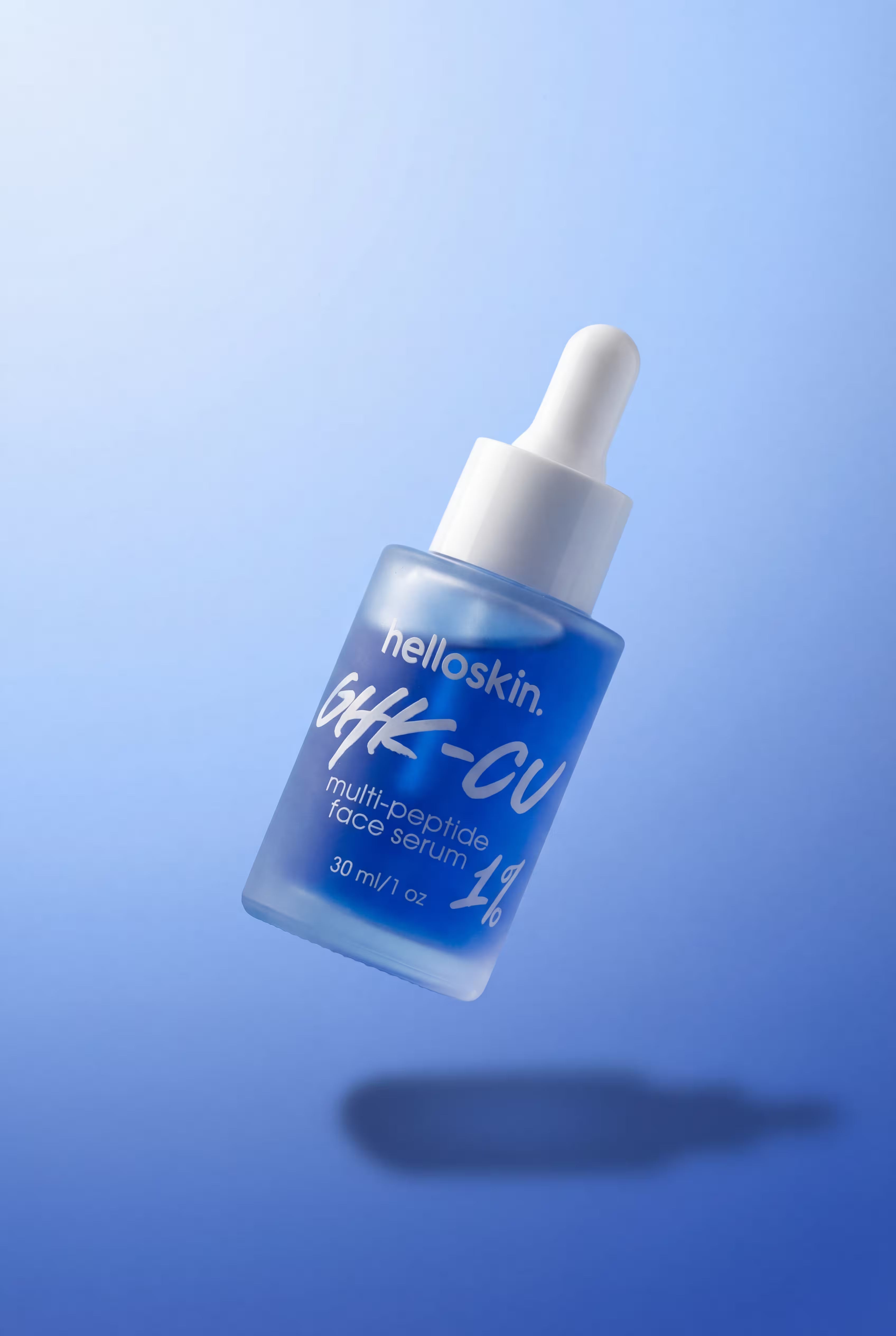
Hormonal acne can respond to topical treatment when a routine combines sebum regulation, inflammation support, and post-breakout repair. Helloskin's mapped protocol pairs niacinamide, GHK-Cu, and LED support in one compact routine.
Run for 8-12 weeks and track your cycle alongside it. The biology takes time.
01
AM or PM. Supports blemish-prone skin, congestion, and the look of post-acne marks.
02
PM. Supports post-breakout repair and helps minimise visible recovery time.
03
Three times weekly. Blue and red light support bacteria targeting and inflammation calming.
Why This Stack
Breakouts that flare around your cycle, stress or hormone shifts
Helps keep shine and congestion in check without the harsh vibe
Adds blue and red light support when your skin is doing the most
Supports visible recovery after post-breakout chaos
Common Questions
Yes, this protocol is designed as a topical routine. If your skin is changing after starting or changing the pill, stay consistent for 8-12 weeks and check with your clinician if you are also using prescription acne treatments.
Use extra care during pregnancy or while trying to conceive. Review every active in your routine with your GP, dermatologist, or obstetric care team before starting, especially if you are combining Helloskin products with prescription treatments.
Most routines need at least one full skin cycle to start showing meaningful change. Expect more reliable visible improvement after 8-12 weeks of steady use, especially when you track flare timing against your cycle.
Hormones – not your cleanser. When hormones shift (your cycle, stress, PCOS), skin makes more oil, and that extra oil plus dead skin can block pores. It tends to show up along the jaw and chin, where there are more oil glands and hormone receptors. It's driven from the inside, so skincare works on the outside – the look and feel of the skin – while your body handles the rest.
Because that's where the oil glands and hormone receptors cluster. The lower third of the face – chin, jaw, sometimes the neck – has more of both, so it reacts first when hormones move. If your breakouts sit mostly there and track with your cycle or stress, that pattern points to hormonal rather than congestion from products.
A calm, consistent routine beats a harsh one. For breakout-prone skin, look for azelaic acid (we run the real 20%), niacinamide and a gentle exfoliant like salicylic acid – they support clearer, calmer-looking skin without stripping. Skip heavy oils and over-scrubbing, which usually backfire. Skincare supports the look of the skin; it won't override the hormones, so give it time and stay consistent.
It ebbs and flows with your hormones, and skincare is a steady support, not an overnight switch. Give a consistent routine eight to twelve weeks to show in the look of your skin. Because it's hormone-driven, persistent or painful deep breakouts are worth a chat with a GP or dermatologist – a good routine and professional advice aren't either/or.
Timing and location are the tells. Hormonal breakouts tend to flare with your cycle or stress and cluster on the lower face; everyday congestion is more about pores, products and sweat, and shows up more broadly. The routine overlaps a lot – gentle cleansing, non-stripping actives, no over-scrubbing – but knowing which you're dealing with stops you chasing the wrong fix.
Your cart is currently empty.
Not sure where to start?
Try these collections: