What is PDRN? The Salmon DNA Serum Everyone’s Asking About
If you have been anywhere near K-Beauty content you’ve seen it. But most of what you see – Injections, Rejuran, Skin boosters, needles in creams, expensive clinic treatments - It’s everywhere and there are so many opinions on it. So, when topical PDRN serums start popping up, you naturally have some questions. Does it actually work when you just slap it on your skin? Or are those TikTok influencers right in saying it’s just hype riding on the back of the injectable version? These are all questions I asked myself and needed answers to before we made ours at helloskin. So What Actually Is It? PDRN is fragments of DNA extracted from Salmon. And yes, I am talking about the fish. I know it might sound weird but hear me out. Salmon DNA is 96.5% identical to human DNA. Your skin recognises it and it knows what to do with it. And it isn’t new. PDRN has been used in medicine since the 1980s. The Italian Medicines Agency approved it for tissue regeneration in 1994. So as an ingredient it has years of clinical backing and it’s not just a TikTok trend. When you apply PDRN to your skin those DNA fragments do a few things: - They activate something called the A2A receptors which basically switches your skin into repair mode. - They provide nucleotides which are the building blocks that your skin cells need to regenerate.- They support collagen production while calming inflammation. It’s not just sitting on the skin surface. It’s actually working at a cellular level. BUT how the PDRN is formulated and delivered to the skin matters most and we will get to that a little further down. Where Does the Salmon DNA Come From? This matters to me so let’s talk about it first. THE PDRN in the helloskin serum comes from Salmon fish that are already being processed for the food industry. The DNA is extracted from the Salmon reproductive cells as a byproduct of existing agriculture and food production. These fish aren’t being farmed specifically for our skincare. They are already part of the food supply chain. The extraction process uses high temperatures to purify the fragments and remove all proteins that could cause reactions so what you are left with is pure PDRN. Is it cruelty free? Yes ours is – we never ever test on animals. Is it vegan? No, its animal derived and the single product in our range that features animal derived ingredients. And we are completely transparent about that. Now, Does Topical Actually Work? Here is the honest answer that no other skincare brand will never tell you. Not even the K-beauty ones. Injectable PDRN goes straight into your dermis through the needle. No barriers to cross so you see results faster because the delivery is immediate and concentrated. That’s why clinics charge $900AUD+ per session. But here is what they don’t want to tell you. Those results fade and you need to keep going back every few months for another session and another bill. It adds up fast and it’s not realistic for most people long term. Topical PDRN needs to work harder as it needs to penetrate your skin barrier to get where it needs to go to do its job properly. And most PDRN serums on the market don’t do much because they’re not formulated intelligently. What really matters is concentration, formulation and delivery. A serum with 10,000ppm (1%) PDRN sitting in a watered down base with fillers and full of silicones? Those silicones create a film that can block absorption and the PDRN will just sit on the surface of your skin doing nothing. And honestly, you’ve just wasted your money – we’ve all been there! A properly formulated serum at clinical concentration with ingredients that enhance penetration and support the PDRN to reach the deeper layers of the skin will give you a completely different outcome. Will topical results happen as fast as injectables? No, BUT with consistent daily use, an intelligently formulated topical PDRN will deliver the same regenerative benefits over time. The difference is you’re building those results gradually and sustainably rather than chasing a quick fix that will fade. Plus, its non invasive! No needles, no downtime and no expensive clinic visits. Just a simple and easy add on to your morning and night skincare routine. Basically, injectables are the intensive hit that fade and topical is the daily maintenance that compounds over time. Both work. But one you can use daily and forever. But the TikTok Derms and Influencers Are Calling BS … Let’s Unpack it! Most of you are here because you do the research and honestly, we love that about you because you are the person we make helloskin for, the intelligent skincare lover! And you’ve probably heard all the talk online from the sceptics – the injectable nurses, the self proclaimed skin experts telling you it doesn’t work and you’re wasting your money. And like I really appreciate them, they keep the industry honest, but some of what they’re saying needs unpacking because it’s not the full picture. 1. “the molecules are too big to penetrate”The one has truth to it. There’s something called the 500 Dalton Rule. Molecules above 500 daltons struggle to passively cross your skin barrier. PDRN molecules range from 5 000 to over 100 000 daltons depending on processing and clearly that’s above the threshold. So yes “raw” PDRN dumped into a basic formula is going to sit on your face doing nothing. This is why HOW PDRN is processed matters. Fragmented DNA at lower molecular weight penetrate better. What delivery systems and penetration enhancers are used in the formula around the PDRN matters. Whether silicones that create a barrier that blocks absorption are present in the formula also really matters. A properly formulated serum addresses this – a lazy unintelligent formula does not. 2. “There Are No Verified Clinical Studies on Topical PDRN”The bulk of PDRN research available are on injectable formats because that’s where it started in medicine (studied for wound healing, tissue regeneration and clinical settings). But there IS research on topical PDRN showing improvements to skin hydration, texture and barrier function. It’s newer and there might be less of it, but it exists. The real point is this: topical and injectable are different tools. Injectable delivers faster, more dramatic results because it bypasses the skin barrier entirely. Topical builds results gradually with consistent daily use. Both work. Different delivery, different timeline. 3. “It’s Just Expensive Hyaluronic Acid”This one really frustrates me because it shows complete misunderstanding of what PDRN does. Hyaluronic acid hydrates. It draws water into your skin and holds it there. That’s it. Important but limited. PDRN works at a cellular level. It activates A2A receptors that switch your skin into repair mode and provides nucleotides which are building blocks for cell regeneration. It works hard to support collagen production and calms inflammation. They are completely different ingredients doing completely different jobs. 4. “Brands Are Just Angel Dusting" Or What We Like to Call "Fairy Dusting”This one I truly agree with! A lot of big name brands throw 100ppm in their formula and on their packaging as if it’s a massive flex. They literally do this just to be able to say, “hey our product has PDRN and look it’s at 100!!” which reads as wow right – I mean 100 is a big number! 100ppm is equal to 0.1%. Yep, ZERO POINT ONE. And 0.1% is going to do nothing for your skin. This is exactly why concentration matters and why we’re all about transparency. Helloskin PDRN at 1.2% (12 000ppm) shows that not all PDRN serums are born equal. What’s In Our helloskin PDRN Serum formula that ticks all the right boxes? Here is our full ingredient list because we don’t hide anything: Water, Glycerin, Butylene Glycol, Niacinamide, Palmitoyl Tripeptide-1, Palmitoyl Tetrapeptide-7, Panthenol, Sodium DNA, 1,2-Hexanediol, Pentylene Glycol, Hydroxyacetophenone, Madecassoside, Sodium Hyaluronate, Xanthan Gum, Beta-Glucan, Sodium Hyaluronate Crosspolymer, Hydrolyzed Hyaluronic Acid, Arginine, Carbomer, Sodium Acetylated Hyaluronate, Centella Asiatica Extract, Asiaticoside, Portulaca Oleracea Extract, Adenosine, Tetrasodium Glutamate Diacetate, Ethylhexylglycerin, Cyanocobalamin The ingredient highlights: Sodium DNA That’s your PDRN at 1.2% concentration (its sits high on the INCI list). A lot of Korean beauty serums love measuring in ppm because big numbers sound impressive, we talked about this above. Helloskin’s PDRN sits at 12 000ppm so when you see a popular K-beauty brand boast 100ppm (0.1%) on their packaging, think twice before you add to cart. FOUR Types of Hyaluronic AcidSodium hyaluronate, sodium hyaluronate crosspolymer, hydrolyzed hyaluronic acid, and sodium acetylated hyaluronate. Different molecular weights mean hydration at every level of your skin. Surface, mid-levels, and deeper down. Most brands will give you one and call it a day. Adenosine This one’s important. Adenosine works through the same A2A receptor pathways as PDRN and they amplify each other. This ingredient also has its own benefits for collagen and fine lines. Matrixyl 3000That’s the Palmitoyl Tripeptide-1 and Palmitoyl Tripeptide-7. The peptides that signal collagen production and calm inflammation. Beta Glucan A really underrated ingredient in our opinion. It outperforms standard hyaluronic acid for hydration in some studies and it’s amazing for barrier support too. Madecassoside & Asiaticoside There are the isolated active compounds found in Centella Asiatica, not just a vague Centella extract where you have no idea how much of the actives you’re getting into your skin. Madecassoside calms redness and asiaticoside supports healing and collagen. Niacinamide Brightening, pore refining and barrier support. It works beautifully with everything else here in our formula. AND as with everything we create at helloskin, no silicones, parabens or sulfates or anything nasty for the skin. What Results You Can Expect This is where we get very honest. Because we hate it when brands overpromise. This isn’t filler. You’re not going to walk out looking different in twenty minutes. PDRN in a serum works at a cellular level providing raw materials for repair and regeneration over time. 1-2 weeks: Your skin feels different. More hydrated, plumper, calmer. The four types of hyaluronic acid and beta glucan get to work straight away. You might wake up with your skin looking better than when you went to sleep. 3-4 weeks:Skin texture starts to improve and that dull, tired look begins to lift. People might even start asking you what you changed ;) 6-8 weeks:This is when the regenerative benefits start to show. Firmer skin, softer lines, and that healthy glow that’s hard to fake. They key is consistency. Every day. Let it build over time and the results will come. How To Use It Good news. PDRN plays well with most actives. No conflicts with Vitamin C, acids, or retinol. Basic routine:Cleanser → PDRN Serum → Moisturiser → SPF if it's morning If you have our GHK-Cu serum too:Split them up. Don't layer them in the same routine, give each one space to do its job properly. Your skin can only absorb so much at once. GHK-Cu in the morning (if you use Vitamin C, move your GHK to the evening routine) and PDRN in the evening. Always, always sandwiched between a good cleanse and a nourishing moisturiser. Give each one space to do its job properly. Your skin can only absorb so much at once. Who Is This For? Pretty much anyone honestly. But it's especially great for: Dull tired skinIf your skin has lost its glow and just looks flat. PDRN helps bring that healthy radiance back. Dehydrated skinBetween the PDRN and four forms of hyaluronic acid plus beta-glucan, this is serious hydration. Skin recovering from treatmentsPost-microneedling, post-peel, post-laser. The regenerative support really helps here. Of course, make sure you are following your therapists instructions for after care and don’t introduce too early. Sensitive skinIt's gentle. Works with your skin not against it. No forcing, no irritation. Anyone wanting anti-ageing without irritation — If retinol isn't for you, PDRN offers regenerative benefits without the drama. Why helloskin? We're the first Australian Made PDRN serum. That green kangaroo certification actually means something. Every Korean PDRN product you find here is imported. Ours is formulated and manufactured right here in Australia. Local quality control with our high Aussie standards. Clinical concentration. Not diluted down to nothing and a complete formula. Not just PDRN thrown into a basic base. Four types of hyaluronic acid, adenosine working on the same pathway, beta-glucan, Matrixyl peptides, isolated Centella actives. Everything working together. No silicones blocking absorption. No compromise. And we're the first Australian brand to offer both PDRN and GHK-Cu. Two different regenerative pathways. PDRN provides the raw materials. GHK-Cu tells your cells what to do with them. The Bottom Line? PDRN works. Topical PDRN works. BUT it must be formulated properly. Our is. Questions? We’re always here – support@helloskin.com.au XxSouraya & Your Glow Crew
Learn more
What Is PDRN? The Salmon DNA Serum Taking Over Australian Skincare
If you’ve been anywhere near K-Beauty content lately you’ve probably come across PDRN. It’s one of those ingredients that skincare obsessives fly to Seoul for or pay hundreds of dollars per treatment for locally. The before and afters are mind glowingly incredible. And then you look into it and realise … its mostly injections. Skin boosters. Mesotherapy. Clinic treatments that cost a fortune and require actual needles in your face. So, when topical PDRN serums started popping up, the obvious question was… does it actually work when you just put it on your skin? Or is it all marketing spin riding on the success of the injectable version? I’m going to be straight with you, as I always am! That’s exactly what I wanted to know before we made ours. Let’s start with talking about what PDRN actually is: PDRN stands for Polydeoxyribonucleotide. Yep, another mouthful. Essentially, it’s a fragment of DNA specifically extracted from salmon. Before you wrinkly your nose at “Salmon DNA”, hear me out. Salmon DNA is used because it’s the most identical to human DNA. We’re not talking like just a little bit the same. It’s actually 96.5% structural similarity. That’s not a marketing number, that’s biology. Your skin cells recognise it and know exactly what to do with it. PDRN has been used in medicine since the 1980s to help heal damaged tissue. The Italian Medicines Agency approved its use back in 1994 for tissue regeneration. It’s not just some new K-Beauty TikTok trend that appeared in the last few years. It has serious clinical backing going back decades. The injectable version (you might have heard of Rejuran) launched in Korea in 2014 and became massive. Celebrities, influencers, anyone serious about their skin was getting it done. Then skincare brands started putting PDRN into serums and creams. And that’s where things get interesting. The Big Question: Does Topical PDRN Work Like the Injectable? There is a lot of conflicting information out there. Lots of opinions. But I only like to talk about the facts so let’s get into it. Here is what the sceptics say: PDRN molecules are large. The skin barrier is designed to keep things out. That is its job. Injectable PDRN bypasses that barrier entirely and delivers directly into the dermis. So how can a topical serum possibly compete? It’s a fair point. And honestly? A lot of PDRN serums probably don’t do that much. But here’s what the sceptics miss entirely: Not all topical formulations are created equal! AND YES, I know, I say this a lot – but it’s the cold hard truth! Recent research on topical PDRN shows that with the right formulation technology, meaningful results ARE achievable. Studies have demonstrated improvements in skin hydration, texture, and barrier function from topical application. One study found that advanced formulations can improve PDRN bioavailability by up to 60% compared to basic solutions/formulations The key factors in formulation that contribute to this are: - How PDRN is stabilised - What delivery systems are used - The concentration - What supporting ingredients are included. A well formulated topical PDRN serum won’t give you the same instant, dramatic results as a clinic injection. But it CAN provide genuine benefits with consistent daily use. And for most of us who aren’t getting weekly or monthly clinic treatments, that’s actually more sustainable. Let’s take a moment and think of it this way: Injectable PDRN is like an intensive treatment. Topical PDRN is like daily maintenance.Different tools, both absolutely useful. How PDRN Works In Your Skin When you apply PDRN to your skin daily, those DNA fragments do a few things: 1. They Activate A2A Receptors These are like the molecular light switches on your skin cells. When they are triggered, they kick on the regenerative process and your skin switches into repair mode. 2. The Provide Nucleotides These are our skins building blocks of DNA. When your cells are trying to repair themselves, they need raw materials. PDRN delivers those materials directly. 3. They Calm InflammationPDRN has anti-inflammatory properties, which is why it’s often recommended for sensitive or reactive skin. This is different from ingredients that just sit on the surface and hydrate. PDRN is actually interacting with your skin at a cellular level. What Makes helloskin PDRN Serum So Great? Well – our formulation philosophy and our concentrations! Here is helloskin’s PDRN Serum’s Full ingredient list, because transparency is what we are all about at helloskin! Water, Glycerin, Butylene Glycol, Niacinamide, Palmitoyl Tripeptide-1, Palmitoyl Tetrapeptide-7, Panthenol, Sodium DNA, 1,2-Hexanediol, Pentylene Glycol, Hydroxyacetophenone, Madecassoside, Sodium Hyaluronate, Xanthan Gum, Beta-Glucan, Sodium Hyaluronate Crosspolymer, Hydrolyzed Hyaluronic Acid, Arginine, Carbomer, Sodium Acetylated Hyaluronate, Centella Asiatica Extract, Asiaticoside, Portulaca Oleracea Extract, Adenosine, Tetrasodium Glutamate Diacetate, Ethylhexylglycerin, Cyanocobalamin To the average eye, this is just a list of words that sound more like chemicals than ingredients that actually do something for the skin. So let’s delve into the ones that really stand out here. Sodium DNA: That’s your PDRN. We sit at 1.2% concentration, which is clinical level for a topical format. A lot of Korean skincare serums measure in ppm (part per million) because the numbers sound more impressive. But here’s the thing: 10,000ppm = 1%. So, when you see popular K-Beauty brands boasting 100ppm of Salmon DNA in their PDRN serums – the maths says that’s actually 0.01%........... helloskin PDRN has 120x more at 1.2%....... 12,000ppm. We just don’t dress it up :) Four Types of Hyaluronic Acid:Sodium Hyaluronate, Sodium Hyaluronate Crosspolymer, Hydrolyzed Acid, and Sodium Acetylated Hyaluronate. Talk about hydration baby! Each of these forms of hyaluronic acid has a different molecular weight. That means hydration at the surface, mid-levels, and deeper in your skin. Most brands give you one form. We wanted more for you! Adenosine:This is a big one. Adenosine works through the same A2A receptors pathway we talked about above. They amplify each other. This ingredient also has its own anti-aging benefits for collagen production and reducing the appearance of fine lines. Palmitoyl Tripeptide-1 and Palmitoyl Tetrapeptide-7:The Matrixyl 3000 duo. Signals collagen production and calms inflammation. Beta-Glucan:Honestly such an underrated ingredient. It actually outperforms standard Hyaluronic Acid for hydration in some studies, plus it supports your skin barrier, and it has anti-inflammatory benefits. Madecassoside and Asiaticoside:These are the active compounds from Centella Asiatica (Cica). Not just a vague Centella Extract claim where you don’t know what you are getting exactly. Madecassoside calms redness. Asiaticoside accelerates healing and supports collagen. Niacinamide:Brightening, pore refining, barrier support. Works well with everything else in our formula. Cyanocobalamin:Or Vitamin B2 supports overall skin health for that healthy looking glass skin glow. And as with everything we create at helloskin – No Silicones or other nasties that block absorption. What Results Can You Expect From helloskin PDRN Serum? I’m a realist who hates when skincare brands overpromise. So, I’m keeping it real. Weeks 1-2: Your skin will feel different. More hydrated, plumper and calmer. The four types of hyaluronic acid and beta-glucan get to work pretty much straight away. You might wake up with your skin looking better than when you went to bed! Weeks 3-4: Texture starts to improve. Skin looks healthier. That dull, gloomy tired look starts to lift. People might start to ask if you have changed something ;) Weeks 6-8: The regenerative benefits really start showing now. You will begin to notice improved firmness, fine like looking slightly softer and that healthy glow is honestly hard to fake! BUT AGAIN – I repeat – every person’s skin journey is different. Some will see results much sooner and some will need a little more time. So this is why we always say CONSISTENCY. That is the key, the only key to results. Consistent daily use means your skin is constantly getting regenerative support and your results will compound over time. It’s not like a filler where you walk out looking different. It’s a gradual improvement in your skin’s actual health. Which honestly? Is more sustainable anyway! The Salmon Question Yes, PDRN comes from salmon. Specifically, from salmon reproductive cells through a high-temperature purification process. The heat removes all proteins that could cause reactions, leaving pure DNA fragments. The salmon used come from established aquaculture. They are already being processed for the food industry. PDRN is a BYPRODUCT, not the primary reason the fish exist in this process. Is It Cruelty Free?We DO NOT TEST ON ANIMALS at helloskin. The salmon are not being harmed specifically for this ingredient. Is It Vegan?No. It’s animal derived. We’re 100% transparent about that. If that’s the deal breaker for you, that’s totally fair. But the benefits are there and scientifically proven. How To Use helloskin PDRN Serum? Good news: PDRN is way more flexible than some other actives. It doesn’t conflict with Vitamin C or other acids. It plays well with Azelaic Acid and even Retinol. But if you are using Retinol, we recommend alternating nights just to keep things simple and your skin barrier happy. Helloskin PDRN Serum Basic Routine Guide: Cleanse, helloskin PDRN Serum, moisturise > SPF is a must in your AM routine. Morning Routine: Cleanser → GHK-Cu → Moisturiser → SPFEvening Routine: Cleanser → PDRN → Moisturiser** Or vice versa if you use Vitamin C in the morning ** Why not layer them? It’s not that they conflict. It’s about keeping things simple and not overwhelming your skin with too many actives at once. Let each product do its job properly. Who Is helloskin PDRN Serum For? PDRN is pretty versatile. It works with your skin rather than forcing it do something, which means its suits most skin types. But it is especially good for: - Tired, dull skin. If your skin has lost its glow and just looks… flat. PDRN helps restore that healthy radiance. - Dehydrated skin. Between PDRN and four forms of hyaluronic acid plus beta-glucan, this will give your skin some serious hydration. - Skin recovering from treatments. Post microneedling, post peel, post laser. The regenerative support helps very much here.- Sensitive skin. It’s gentle. So, no forcing, no irritation as it works with your skins natural processes.- Anti-aging without irritation. If retinol doesn’t play well with your skin, PDRN offers regenerative benefits without that drama. But Why helloskin PDRN Serum Specifically? We’re the first Australian Made PDRN serum. That green kangaroo certification means something. Every Korean PDRN product you find here is imported. Ours is formulated and manufactured in Australia. Local quality control, local manufacturing standards. Supporting local industry. The concentration is clinical level. Not diluted down to basically nothing. The formula is complete. Not just PDRN in a basic base. Four types of hyaluronic acid, adenosine (working on the same pathway as PDRN), beta-glucan, Matrixyl peptides, isolated Centella actives. Everything working together. No silicones blocking absorption. And we also have GHK-Cu. We're the first Australian brand to offer both. If you want to build a complete regenerative routine, you can do that. If you want to maximise regenerative skincare, using both serums gives you two different pathways working together. GHK-Cu is a signalling peptide. It tells your cells to act younger. Produce more collagen. Repair faster. PDRN provides the raw materials. Each product gets its own time to work. Your skin barrier isn't overwhelmed. And you're addressing regeneration from two different angles. The Bottom Line PDRN isn’t just a clinic ingredient anymore. Well formulated topical serums can deliver real results at home, consistently, without the needles or the price tag of professional treatments. Will it be a dramatic, overnight improvement? No. And we are always clear about that. Its sustainable, accessible and DOES deliver results with consistent, daily use. The research exists; you don’t need to take our word for it. The results exist too. BUT the serum must be formulated properly. Ours is just that. Australian Made. Clinical concentration. Complete formula with proper delivery systems and supporting ingredients. No compromises. If you’ve been curious about PDRN but weren’t sure if topical works, give it 6-8 weeks of consistent use and see for yourself. Or see helloskin’s PDRN Serum customer testimonials. And if you have any questions, we are here. Just reach out to us anytime. XxSouraya & Your Glow Crew
Learn more
What Is GHK-Cu? The Copper Peptide Your Skin Actually Needs
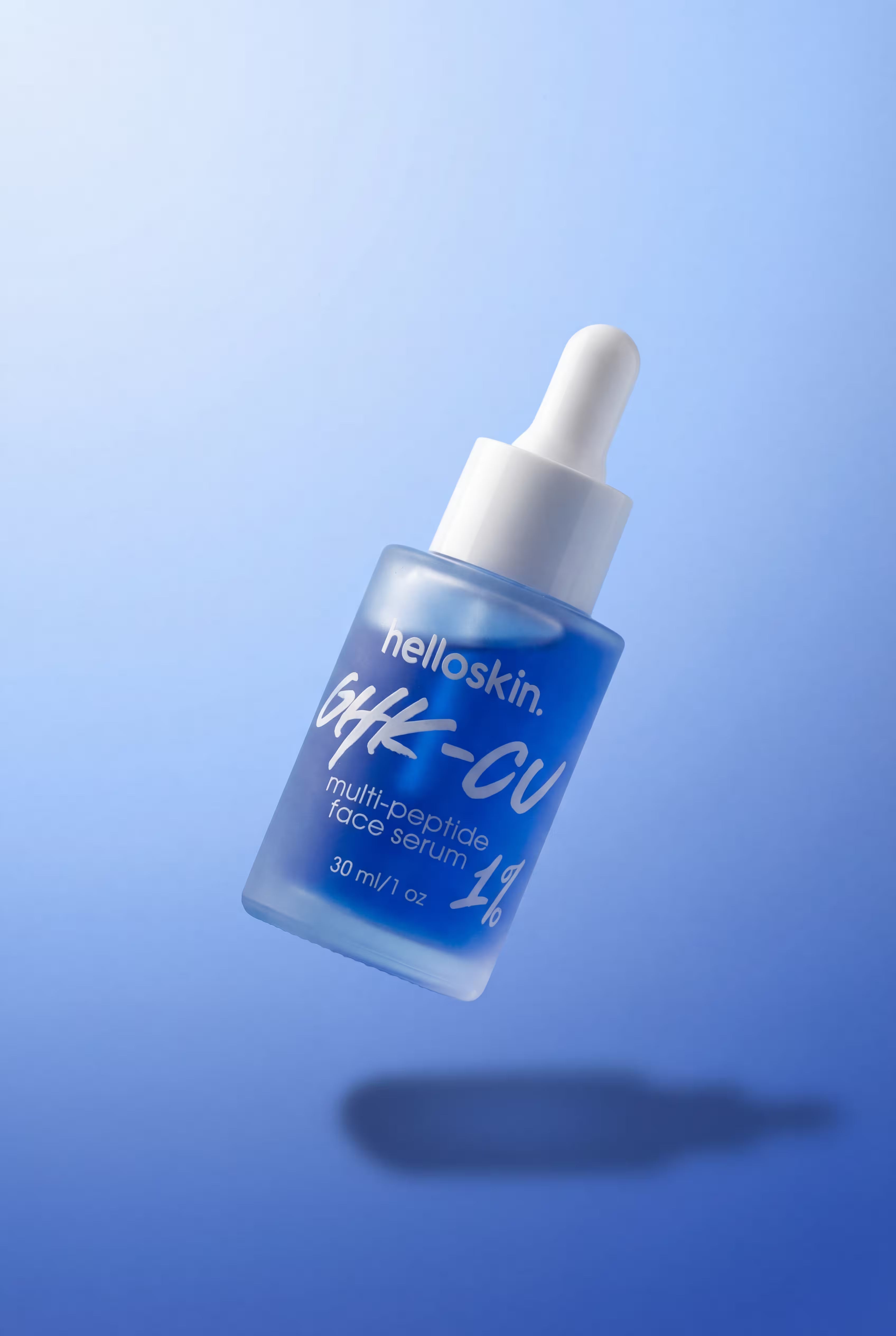
GHK-Cu Copper Peptide Serum - What It Actually Is and Why Everyone’s Suddenly Talking About It So copper peptides have been blowing up lately. You’ve probably seen them all over TikTok or maybe heard someone mention GHK-Cu and wondered what on earth that even means! Or maybe you’ve been down the skincare rabbit hole one too many times and you’re just now hearing about this ingredient? Well, I’m here to tell you that its actually been around since the 1970’s. Yep, the 1970’s. This isn’t some new fad ingredient that popped up last year. GHK-Cu has decades of research behind it. So why is everyone only talking about it now? GREAT QUESTION! Let me break it down… What Actually is GHK-Cu? GHK-Cu stands for Glycyl-L-Histidyl-L-Lysine Copper. It’s a mouthful, yes, but that’s why everyone calls it GHK-Cu or copper peptide. But what makes this ingredient so different from most of what’s on the market? It’s not something synthetic that scientists invented in a lab. GHK-Cu naturally occurs in your body. It’s in your blood plasma, your saliva and your body already knows what to do with it. The problem is that your body produces way less of it as it you get older. When you’re 20, you’ve got plenty. By the time you hit your 40’s your levels have dropped significantly. And that decline tracks closely with all the stuff we associate with ageing skin. Like less collagen, slower healing, loss of firmness and those pesky little fine lines. So, the theory is pretty simple: if your body is running low on something it needs, give it more! Why GHK-Cu Works Differently to Other Anti-Ageing Ingredients? Most anti-ageing ingredients work by forcing your skin to do something. Retinol speeds up cell turnover (which is why it can be irritating in some formulas). Acids dissolve the bonds between dead skin cells. Vitamin C is an antioxidant that neutralises free radicals all around us. GHK-Cu works differently. Its signalling a peptide. Instead of forcing anything, it sends messages to your skin cells telling them to behave like younger cells. Produce more collagen. Repair faster. Function better! It’s like having a conversation with your skin instead of yelling at it lol And because your body already recognises GHK-Cu (remember I told you that it naturally produces it), there is no adjustment period. Purging is uncommon, no irritation and your skin knows exactly what to do with it. BUT DOES IT ACTUALLY WORK IN A SERUM?? This is the million dollar question we get asked daily. So let’s talk about the elephant in the room why don’t we! If you have done your research on GHK-Cu, you’ve probably seen it mentioned alongside clinic treatments. Mesotherpay, skin boosters, needling treatments, and injectable this and that. And I bet you are sitting there thinking… if the professionals are injecting this stuff, does putting it on my face in a serum actually do anything? And I get it; it’s a fair question. The sceptics will say no. Here is the honest answer based on factual research: YES, topical GHK-Cu works. BUT only if the formula is done right! Let me explain why: CHK-Cu is a tripeptide. That means it’s made up of only three amino acids. In the world of cosmetic science, that’s tiny. And size matters when it comes to penetration. A lot of peptide-based skincare products on the market are too big to get through your skin barrier. They just sit on the surface looking pretty and doing absolutely nothing. You’ve essentially bought an expensive bit of nothing. But tripeptides like GHK-Cu when formulated correctly, with the right delivery system built into the formula, can be small enough to penetrate the deeper layers of your skin where it can do its magic. Where your collagen is made and where the repair signals need to go. The research on topical GHK-Cu (not the injectables) is pretty impressive. Studies have shown it can stimulate collagen production, improve skin elasticity, reduce fine lines and speed up wound healing. All from applying it to your skin, consistently over time. No needles required. Is it AS intense as getting it injected straight into your dermis? Probably not. BUT most of us aren’t booking weekly clinic appointments with the hundreds and thousands of dollars we have to spare. We need something that works at home, that we can use consistently and that delivers results over time. This is what a well formulated topical serum does. What Makes helloskin’s GHK-Cu formula different? Here is where I get a bit obsessively passionate. Because not all copper peptides are created equal - and we have gone into that in a bit more detail in another comparison blog found on our website. And honestly? A lot of what is already out there is rubbish. Some brands use copper peptides at tiny concentrations just so they can slap it on the label. In fact, they do this with a lot of actives not just peptides. Others load up on the silicones which feel nice but actually block peptide and active ingredient penetration into your skin (I know this is heavily debated in the cosmetic science field, but I stand by this claim). Not to mention the long-term effects of using silicones on your skin argh. And some don’t stabilise the formula properly, so the copper peptide degrades before it even gets to you. Helloskin’s GHK-Cu serum is at exactly 1.2% concentration. Now before someone jumps in saying they’ve seen higher percentages elsewhere – yes, higher concentrations exist. But more isn’t always better with peptides. Here is why: peptides work on receptor sites in your skin. Once those receptors are full, adding more doesn’t do anything extra. It’s like trying to park five cars in one parking spots – only one fits. Plus, at very high concentrations, stability becomes an issue. The peptide can oxidise and degrade faster, which actually makes it less effective. You end up paying more for something that does not work. Through our own research and testing, we found 1.2% to be the sweet spot. High enough to be effective. Stable enough to actually work. Helloskin’s Full Ingredient Breakdown – Because we are all about transparency here ;) Water, Propanediol, Palmitoyl Tripeptide-1, Niacinamide, Glycerin, Palmitoyl Tetrapeptide-7, Panthenol, Copper Tripeptide-1, Hydrolyzed Sodium Hyaluronate, 1,2-Hexanediol, Hydroxyacetophenone, Betaine, Xanthan Gum, Tocopherol, Sodium Hyaluronate, Madecassoside. Here is what matters from our ingredients list: - Copper tripeptide-1. That’s your GHK-Cu. The star of the show.- Palmitoyl Tripeptide-1 and Palmitoyl Tetrapeptide-7. These two together are what’s known as Matrixyl 3000. They work alongside the copper peptide to boost collagen production and calm inflammation. Think of them as the backup singers making the lead singer sound better.- Niacinamide. Brightening, pore refining, barrier supporting goodness. And it plays well with peptides.- Hydrolyzed Sodoum Hyaluronate and Sodium Hyaluronate. Two forms of hyaluronic acid at different molecular weights means more hydration at different levels of your skin. - Panthenol. Vitamin B5 which is brilliant for hydration and helping your skin barrier stay strong. - Madecassoside. The calming compound from Cenella Asiatica. Soothes any irritation and supports your skin’s natural healing. - Tocopherol. Vitamin E for antioxidant protection. And notice what’s NOT in there? No Silicones. No Parabens. No Sulfates. No PEGs – nothing that’s going to harm your skin barrier health over time. We wanted this stuff to actually work and get into your skin and do its job. But What Are The Results You Can Actually Expect? Let’s be real for a second. This isn’t a filler. It’s not going to plump your face and tighten it up in 20 minutes. Because GHK-Cu works at a cellular level to signal your skin to produce more collagen, repair itself and function like younger skin… it takes time. Here is a realistic timeline: In the first couple of weeks your skin will start to feel smoother and more hydrated. The texture starts to improve. This is the hyaluronic acid and niacinamide doing their thing while the peptides get to work underneath. Weeks 4-6. This is when most people start noticing visible changes. Fine lines looking softer. Skin looking healthier and more “alive”. That tired, dull look starts to lift. In 8-12 weeks the real regenerative benefits kick in. Firmer skin. Better elasticity and the kind of results that make people ask what you’ve been doing. But the key word here is CONSISTENT use. This isn’t a sometimes thing. It’s an everyday thing. Use it daily in your routine. How To Use GHK-Cu properly To Get Results (Please Read This!!) ** GHK-Cu does not play well with acids ** That means no Vitamin C or Azelaic Acid in the same routine as your GHK-Cu. No AHAs or BHAs. Why? Acids destabilise the copper peptide. They basically cancel each other out and you end up wasting both products. So Here Is How To Use It: ** If you don’t use acids in the morning **AM Routine: Cleanse > GHK-Cu serum, massage/pat in until absorbed > MoisturiseEASY PEASY ** If you do use Vitamin C in the morning **Keep your Vitamin C in your morning routine and use GHK-Cu at night instead. PM Routine: Cleanse > GHK-Cu serum, massage/pat in until absorbed > MoisturiseDONSIES Now if you are using PDRN in your skincare routine as well, it’s just as easy! AM Routine: Cleanser > GHK-Cu serum, massage/pat in until absorbed > MoisturisePM Routine: Cleanser > GHK-Cu serum, massage/pat in until absorbed > Moisturise** or vice versa if you are using vitamin c in the morning **Side note, it’s totally fine to use acids with PDRN serum but we believe in less is more so see how these treat your skin and adjust your routine as you see fit. I promise, this isn’t us being difficult or trying to complicate your routines. It’s about getting the best results from each product and not overwhelming your skin barrier. SO Who Is GHK-Cu Actually For? Pretty Much anyone who wants to address signs of ageing without irriration. But it’s especially good for: - People who cannot tolerate retinol. If retinol makes your skin angry, GHK-Cu gives you regenerative benefits without the drama.- Anyone focused on firmness and elasticity. This is GHK-Cu’s specialty.- People Recovering from skin treatments. Post-microneedling, post peel, post laser. The healing support is real. - Sensitive Skin Types. It works WITH your skin, not against it. No forcing, no irritation. - Anyone who wants to simplify. One good peptide serum beats five mediocre products. The only people I would say hold off are those who absolutely won’t separate their acids from their peptides. If you’re going to layer Vitamin C and GHK-Cu together, you’re wasting your money on both. Why helloskin GHK-Cu? Look, we’re not the only brand with copper peptides. I’m not going to pretend we are. But here’s what makes us different: We’re actually Australian made. That green kangaroo logo means something. Our products are formulated and manufactured here in Australia. Not made overseas and shipped in with “Australian Owned” slapped on the label. The concentration is right. 1.2% with proper stabilisation and delivery system. Not a token amount just to get it on the label. Not an unstable mega-dose that degrades before it works. No silicones, no compromises. Nothing blocking absorption. Nothing interfering with the actives. We have PDRN too. We’re the first Australian brand to offer both GHK-Cu and PDRN serums with clinical strength. If you want to go all in on regenerative skincare, you can build a complete routine. The Bottom Line GHK-Cu isn’t a miracle ingredient. Nothing is with topical skincare. But it’s one of the most well researched, genuinely effective anti-ageing ingredients available. And it works in a way that’s completely different to active you’re probably already using. It talks to your skin instead of forcing it. It supports your natural repair processes instead of overriding them. It has been studied for over 50 years, not invented last Tuesday. And yes, it works topically. When the formulation is right. If you’ve got questions about whether this is right for your skin or how to fit it into your current routine, email us at support@helloskin.com.au or DM us on Instagram @helloskin.com.au - We’re real people who read and respond to every customer. XxSouraya & Your Glow Crew
Learn more
skincare essentials


Type: Serums
Helloskin GHK-Cu 1.2% Triple-Peptide Face Serum


Type: Serums
PDRN 1.2% Salmon DNA Multi-Peptide Serum


Type: Serums
The Repair Duo — GHK-Cu + PDRN Serum


Type: Serums
Revive V2 Multi-Peptide Eye Serum | 21% Peptide System


Type: Serums
Helloskin GHK-Cu 3% & AHK-Cu 1% Multi-Peptide Regrowth Hair Serum


Type: Serums
GHK-Cu Multipeptide Eye Serum | 1% Copper Peptide + Ceramides


Type: Serums
Illuminate V2 Multi-Peptide Eye Serum | 15% Peptide System


Type: Face Masks